
Triumph Hurdle Field Size Trends: Smaller Fields and What They Mean for Bettors
 Available in US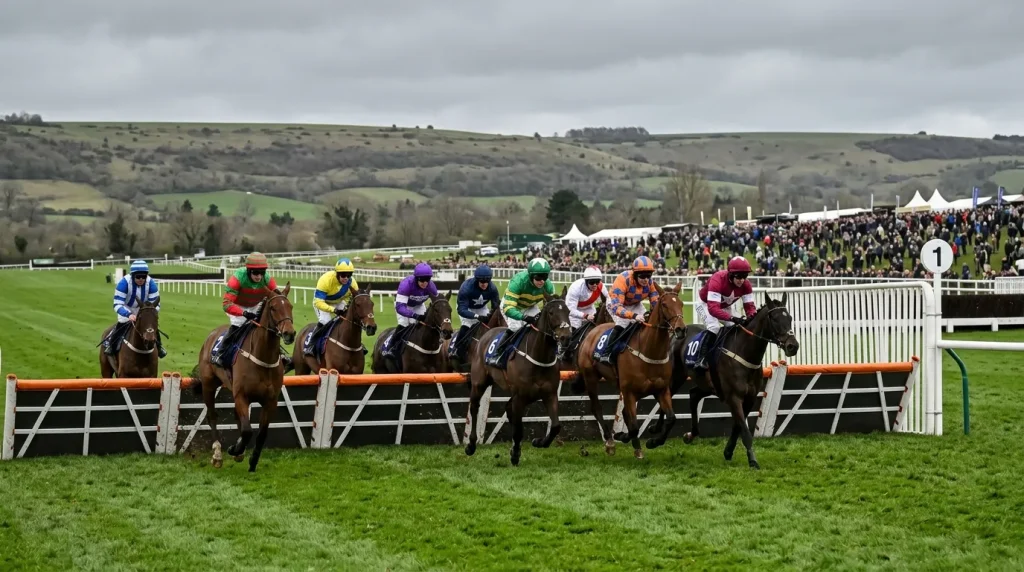
Before the Fred Winter Hurdle was introduced in 2005, the Triumph Hurdle regularly attracted 25 or more runners. A race with that many four-year-old novices jumping at speed was a lottery — exciting to watch, brutal to bet on. Since then, fields have contracted to between 15 and 20 runners, and graded form has replaced cavalry-charge chaos as the primary determinant of the result. That shift has made the Triumph Hurdle more predictable, more form-driven and, for disciplined bettors, more beatable.
Field Size Data: 2005 to 2026
The average Triumph Hurdle field since 2005 has numbered approximately 17 runners. The largest post-Fred-Winter field was 24 in 2006 — a transitional year when trainers were still deciding which race to target. By 2010, the typical field had settled below 20. In several recent renewals, including 2022 and 2023, the field has numbered between 15 and 18, with Willie Mullins accounting for nearly half the runners from a single yard.
The trend is not uniform. Years with a standout favourite tend to attract slightly smaller fields, as connections of marginal contenders redirect their horses to the Fred Winter or skip the Festival entirely. Years without a clear market leader attract larger, more competitive entries — and those renewals tend to produce longer-priced winners. Countrywide Flame at 33/1 in 2012 and Pentland Hills at 20/1 in 2019 both won from bigger-than-average fields where the market had no dominant focal point.
The number of horses in training in Britain fell to 21,728 in 2026, according to BHA data, continuing a multi-year decline. Within that shrinking population, the juvenile hurdling division is thinning faster than the overall figure suggests, because the costs of targeting Cheltenham — travel, entry fees, the risk of injury to a young horse on demanding ground — deter all but the most ambitious connections. Smaller national horse populations feed directly into smaller Festival fields.
Why Fields Are Getting Smaller
Three factors drive the contraction. The Fred Winter absorbs lower-rated juveniles who would previously have been entered in the Triumph by default. The economic pressures on owners — rising training fees, reduced prize money at Core fixtures — discourage speculative entries. And the dominance of a small number of Irish super-trainers, who field multiple runners from their own strings, reduces the incentive for rival connections to enter horses with only an outside chance.
Alan Delmonte, Chief Executive of the Horserace Betting Levy Board, has acknowledged the broader industry context: “It is clear that there has been a material change in the industry environment with turnover down by around 20% in two years.” That decline in betting revenue flows through to prize money, training investment and ultimately to the number of horses being prepared for Festival targets. The Triumph Hurdle is not immune to those economic currents.
Online horse racing betting turnover in Britain fell from £10 billion in the year ending March 2022 to £8.73 billion in FY2023-24 — a decline of over 16 per cent. When less money flows into the system, fewer owners can afford to maintain horses in training at the level required for a Grade 1 at Cheltenham. The field size trend is not just a sporting pattern. It is an economic one.
Smaller Fields Favour Form Players
In a 25-runner Triumph Hurdle, randomness has a larger role. Traffic problems, pace collapses, fallers taking out contenders — these variables multiply with every additional runner. In a 16-runner field, the race is more likely to be decided by ability. The best horse has fewer obstacles, literal and figurative, between itself and the winning post.
This has a direct impact on the SP ceiling. Since the Fred Winter’s introduction, 17 of 21 Triumph Hurdle winners returned a starting price of 10/1 or shorter. In the pre-2005 era, when fields were larger and the race more chaotic, double-digit winners were more common. The compression of the SP range reflects the compression of the field — fewer runners means fewer genuine contenders, which means the market is better at identifying them.
For form players, smaller fields are an advantage. Each runner can be studied in greater depth. Trial form covers a higher percentage of the declared field. The connections between runners — shared trainers, shared trial races, head-to-head form — are easier to map when there are 16 horses to assess rather than 25. The analytical workload is lower, and the signal-to-noise ratio is higher.
There is a secondary effect on market efficiency. In smaller fields, the collective intelligence of the betting market — millions of pounds of assessed opinion — is concentrated on fewer runners. That makes the market harder to beat but also more reliable as a signal. When the market makes a horse 3/1 favourite in a 16-runner Triumph Hurdle, it has done so with deeper analysis per runner than in a 25-runner cavalry charge where the longer-priced horses are barely examined. Respecting that efficiency, rather than fighting it on every runner, is part of what it means to be a form player in the modern race.
The Mullins multi-runner strategy amplifies this effect. When one trainer enters seven or eight runners from a field of sixteen, the informed bettor need only assess the internal hierarchy of that string — jockey booking, trial form, ground preference — to narrow the field to a manageable shortlist. In a 25-runner pre-2005 race with runners from twenty different yards, that shortcut did not exist. The structural shift toward smaller, classier fields is a gift to anyone willing to do the analytical work.
Impact on Place Terms and Each-Way Value
Field size directly determines how many places bookmakers offer for each-way bets. The standard rule in British racing: for handicaps and non-handicap races with 16 or more runners, bookmakers pay four places at one-quarter odds. For races with 12 to 15 runners, three places at one-quarter or one-fifth odds. Below 12 runners, each-way terms shrink further.
In a typical Triumph Hurdle with 16 or more runners, four places are offered, and the each-way proposition is attractive — particularly on mid-range selections at 10/1 to 20/1. But if withdrawals on race morning reduce the field below 16, the place terms change. A horse that looked like strong each-way value at 14/1 with four places becomes a weaker proposition at the same price with only three places. The maths tilts, and what was a positive expected-value bet may become a negative one.
Monitoring the non-runner announcements on race morning is therefore essential for each-way bettors. The field size at declaration stage sets your initial assessment. The field size at the off — after race-morning withdrawals — determines the actual terms. In recent years, the Triumph Hurdle has hovered around the 16-runner threshold, meaning the difference between four places and three places can hinge on a single late withdrawal. That marginal change alters the mathematics of every each-way bet in the race and should be the last variable you check before confirming your wager.
