
French-Bred Runners in the Triumph Hurdle
 Available in US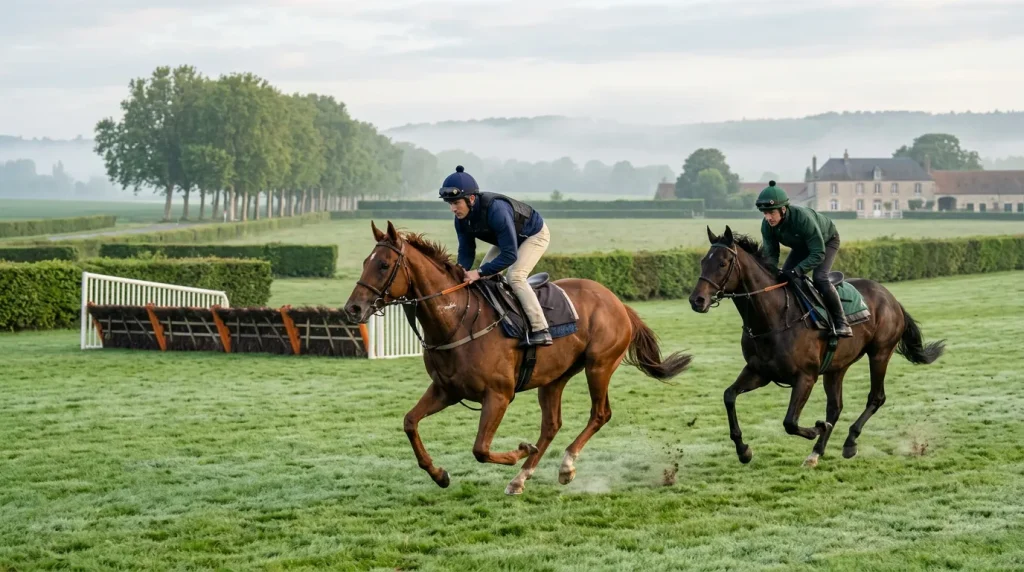
Eleven of the last sixteen Triumph Hurdle winners were French imports. That statistic, astonishingly, goes almost entirely unmentioned in the betting guides that dominate search results for this race. It is perhaps the single most important structural trend in modern Triumph Hurdle betting: the horses most likely to win come from France, are purchased by Irish operations, and arrive at Cheltenham with a form profile that does not fit the conventional British template. Understanding this pipeline — how it works, why it works, and how to spot the next import winner — is an analytical edge that the majority of the betting public does not possess.
Statistics: French-Bred Triumph Hurdle Winners Since 2010
The French-bred dominance is not a recent blip. It stretches back over a decade and a half. Soldatino (2010), Zarkandar (2011), Our Conor (2013), Tiger Roll (2014), Defi Du Seuil (2017), Farclas (2018), Burning Victory (2020), Quilixios (2021), Vauban (2022), Lossiemouth (2023) and Majborough (2026) were all either bred in France, purchased from the French racing or sales circuit, or both. Poniros in 2026, while trained in Ireland, also came through the continental pipeline.
That list includes the winners at virtually every type of starting price — Defi Du Seuil at 5/2, Tiger Roll at 10/1, Poniros at 100/1. The French connection is not a class bias. It operates at every level of the market, producing both favourites and outsiders. The common factor is origin, not odds.
Against this backdrop, the broader horse population in British racing continues to contract. The number of horses in training in Britain fell to 21,728 in 2026, a 2.3 per cent year-on-year decline according to the BHA’s 2026 Racing Report. That shrinkage increases the reliance on imported talent across all jump-racing divisions, but nowhere is the dependency more visible than in the Triumph Hurdle.
How the Pipeline Works: Auteuil to Closutton
The recruitment process begins in France. The country has a deep culture of jump racing, centred on Auteuil in Paris, and produces a steady stream of young horses with stamina-oriented pedigrees and early exposure to obstacles. French bumpers — flat races for jumping-bred horses — serve as the initial proving ground. A promising bumper performance, or a strong run in a maiden hurdle at Auteuil, attracts the attention of Irish and British bloodstock agents working on behalf of major National Hunt owners.
The purchases happen through private sales, claiming races, or the autumn and winter sales at Arqana and other French auction houses. Prices vary wildly. Some recruits cost under six figures; others command prices well into six or even seven figures when wealthy owners like JP McManus, Rich Ricci or the H O S Syndicate compete for the same horse. Minella Academy, who joined Willie Mullins’s 2026 Triumph squad, was purchased for £370,000 after a single bumper win in Cork — but his acquisition was typical of the speculative spending that underpins the pipeline.
Once purchased, the horses are shipped to Ireland and installed at yards in County Carlow (Mullins), County Meath (Elliott) or elsewhere. The transition from French racing to Irish hurdle racing usually involves a maiden hurdle debut at a minor Irish track between November and January, followed by a targeted run at a graded trial — ideally the Spring Juvenile Hurdle at Leopardstown in February. The entire process, from French bumper to Cheltenham Grade 1, can take as little as six months.
The agent networks that facilitate these transfers operate largely out of public view. Harold Kirk, Anthony Bromley and a handful of other specialist bloodstock advisors maintain relationships with French trainers and breeders that give their clients first access to the best young stock. When Selma De Vary was snapped up by Rich Ricci after an emphatic Auteuil victory, the deal was done before most British-based punters had even seen the race. That informational asymmetry is another reason the French pipeline produces overlooked winners: by the time the British market assesses a French import’s talent, the smart money in Ireland has already priced it in.
Why French Horses Thrive at Cheltenham
Three characteristics of French-bred horses align with what the Triumph Hurdle demands. First, stamina. French National Hunt breeding prioritises staying power over speed. Sires popular in French jump racing produce horses who do not stop when the going gets tough, and Cheltenham’s uphill finish is the ultimate stamina test for a four-year-old. Horses bred for sharp, flat speed on good ground often falter on the hill. French-bred imports tend to keep finding.
Second, soft-ground aptitude. French jump racing is conducted predominantly on heavy or soft surfaces. A horse who has raced at Auteuil in November or December has already proven its ability to handle the kind of ground that Cheltenham in March frequently produces. British-trained juveniles who have raced only on good or good-to-soft surfaces face an unknown when the Festival ground deteriorates.
Third, maturity. French-bred four-year-olds are often physically more developed than their British counterparts at the same age, partly because the French system races them earlier and in conditions that build strength. By the time they arrive in Ireland and begin hurdling, they carry a physical resilience that translates directly into the ability to handle the demands of a Cheltenham Grade 1 after only one or two Irish starts.
Spotting the Next French Import Winner
The betting market is not blind to the French connection, but it consistently underprices the depth of the pipeline. Here is what to look for. First, identify which French-bred horses have been purchased by operations with a proven Triumph Hurdle record — Mullins, Elliott, and to a lesser extent Cromwell and de Bromhead. Second, check whether the horse has made an Irish hurdle debut and performed well enough to suggest it can handle the step up to Grade 1 level. Third, assess the timing: a horse whose Irish debut came in November or December has had time to acclimatise and develop; one whose debut came in January may still be adjusting.
The gross gambling yield from online horse racing betting in Britain reached £766.7 million in the year to March 2026, according to the Gambling Commission. That market is large enough to absorb significant liquidity on French-bred Triumph runners, yet the overlay — the gap between the true probability of a French import winning and the price the market assigns — persists because most recreational bettors do not track purchase histories or French form. For those who do, the information advantage is real and recurring.
In practical terms, the each-way market is where the French connection pays best. A second- or third-string Mullins import at 16/1 or 20/1 may not be the stable’s first choice, but it carries the same structural advantages — French breeding, Closutton preparation, Festival experience — as the more fancied runner. When one of these horses drifts in the market because the headline money goes elsewhere, the each-way value can be substantial.
